How Being an Athlete Will Shape Me Into a Better-Prepared Doctor
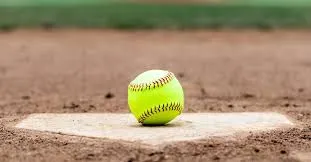
Softball was one of my very first passions, and something that I knew I wanted to take with me as I progressed through college. As I have navigated my first two years of school at Columbia University, I have also learned something very important: the discipline and dedication I devote to softball, and the variety the skills that I have learned throughout my time as a student athlete will undoubtedly help me as I begin medical school and start my journey to become a doctor. It is a common saying that sport prepares you for life, and many of the skills one picks up as a student athlete are ones that will be taken into the workplace. I think this is especially true for those of us on the pre-medical track. There are three things that I have learned in particular that have helped me the most so far during my time at Columbia.
One way in which I believe that softball has prepared me for pursuing a career in medicine is how much my time management skills have improved because of my life as a student-athlete. Since high school, I have managed what is essentially two jobs; going to classes each day, along with the associated homework and office hours attendance, and then competing and practicing for my sport each day. Although it is definitely a challenge sometimes, I think it is a huge benefit that I have been able to hone the skill of time management at a relatively young age, and at an early point in my career in medicine. Like anything, learning how to manage one’s time is a skill that has to be worked on, but I have been lucky enough to have it be built into my everyday life. One of the big ways in which I have been able to concentrate on putting this skill into practice is by keeping a physical planner where I write down all of my tasks for the week. Having a visual checklist of things I need to get done after I attend classes and practice each day helps me stay focused.
Another way I think being an athlete has given valuable perspective– that I will take into my career as a doctor– is having the opportunity to meet people from all walks of life. While it is great to be able to bond with people that I have a lot in common with, softball is one of the ways that I have been able to connect with people from all over the country and the world. This is important to me because I value being able to relate to people from all different backgrounds and cultures. Although I might not share anything else in common with some people, our love of softball has brought us together and continues to help fuel our friendship. Without softball as the common ground, and starting point, I might have never met some of the most cherished people in my life. It does not matter that we may not have gotten along off the field, but what matters is that we are now friends because of what we do on the field, sharing that mutual interest. When working with patients, it is important to me to make everyone feel seen and heard. Softball has allowed me to diversify my circle of friends and acquaintances, and have dialogue about a diverse range of issues impacting several communities, which is most definitely something I will carry with me throughout my career.
Finally, I think one of the most important things I have learned so far as a pre-medical student athlete is the importance of maintaining a work-life balance as I study and compete. Softball takes up a vast amount of time in my schedule, and along with the grueling coursework given to us as pre-medical students at Columbia, there is little free time left to spend with friends. Despite the time constraint, I still try to carve out sections of my week to spend with friends because I know how important that is for my overall being. Mental health in sports is a topic that has been receiving much-needed attention recently. Athletes like Simone Biles, Alyssa Liu, and Naomi Osaka are three women who, despite achieving huge success in their individual sports, have experienced struggles with their mental health. They all attest to how burnout is a significant phenomenon, and every athlete must care for themselves by finding hobbies, holding onto their identity outside of the sport, and staying connected to their support system. This advice is incredibly helpful not only to athletes on the pre-medical track, but to all pre-medical students in general.
Ultimately, softball is an integral part of my life that has helped me throughout my college career and will continue to help me in the future. It has taught me numerous skills such as communication, multi-tasking, time management, self-care, and most importantly empathy. So many lessons we learn throughout our life can be used and applied to our future jobs. Although softball is a sport where failure is at the forefront of everything, every success is much more worthwhile. Hitting “.300” is failing 7 out of 10 times, but this average also earns MLB players millions of dollars a year. It isn’t how many times we fail, but the experience we gain from this failure. Becoming a doctor is no easy task, there will be many hurdles to overcome, but through every battle and obstacle, we come out stronger. Character is built through struggle and hardship, and good character is the first step in becoming a better person and a great doctor.