CRISPR-Cas9: A Scientific Method of Copy and Paste
3 min read
Julia Ann Goralsky (CC '25) discusses CRISPR, its origins, and can be applied in the future.
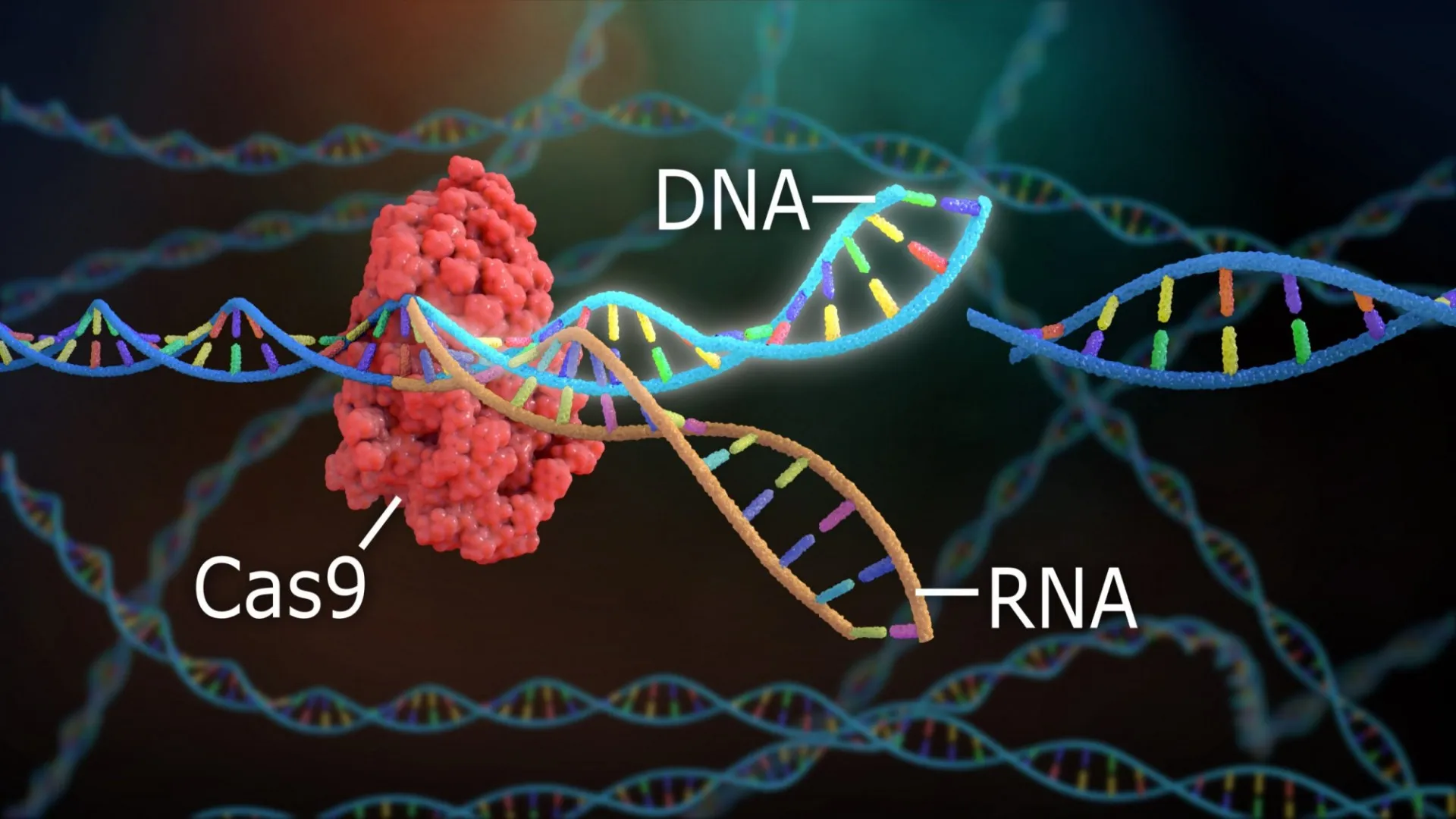
Imagine a world free from disease. A world in which no man, woman, or child goes hungry. A world reliant on clean energy resources to power humanity’s brightest innovations. While this may sound like a far-fetched utopia, a recent invention has brought this shining future just within humanity’s reach. To find the source of this inspiration, one needs to look no further than the 2020 Nobel Prize in Chemistry. Awarded to the first ever all-female team, the 2020 Nobel Prize in Chemistry highlighted the novel technology of CRISPR-Cas9 (1).
CRISPR or Clustered Regularly Interspaced Short Palindromic Repeats can be traced back to its origins in the bacterial immune system. To best understand the system’s mechanics, it is necessary to first explore the age-old war between bacteria and viruses. Scientists have long debated whether viruses are truly alive, given their simple composition of a protein capsule surrounding a small segment of genetic information. As they are not able to reproduce by themselves, viruses inject their genetic information into host organisms, whose cells are then repurposed to make copies of the virus. These copies can then exit the cell and continue the cycle of infection.
Yet, when bacterial cells are attacked by viruses, their immune system provides them with secret weapons: CRISPR genes and Cas proteins. To be specific, bacteria retain copies of the viral DNA once it is injected into their cell body in segments separated by repeating sequences of DNA (which represent what we have identified as the CRISPR genes). Serving the same purpose as a memory cell of the human immune system, these segments of viral DNA allow for the bacteria to identify the genetic information of invading viruses and destroy it with CRISPR-associated proteins, such as Cas9, before it can corrupt the cell (2).
So, how can this evolved system fundamentally transform the foreseeable future? To understand this question, it is necessary to take a closer look at the Cas-9 protein. The Cas-9 protein includes a segment of genetic information called guide RNA. These sequences of nucleotides direct the Cas-9 protein to the appropriate spot in the genome to make its cut. In a paper published in 2012, Dr. Jennifer Doudna and Emmanuelle Charpentier revealed that this guide RNA can be manipulated to represent specific sequences, directing the Cas-9 enzyme to remove designated fragments of DNA (3). Then, in a sort of copy and paste process, a different fragment of DNA, synthesized in a laboratory, can be added in its place. In other words, this tool allows scientists to replace genes in order to generate a different phenotype (such as a beneficial version of a previously disabled type of protein).
Now that we’ve established how this mechanism operates, let’s dive into its specific utopian applications. In the medical field particularly, CRISPR-Cas9 has promised to revolutionize precision medicine. In 2019, the first successful study applied CRISPR-Cas9 to increase the amount of fetal hemoglobin in patients with sickle cell disease. Furthermore, another CRISPR-Cas9-related project has synthesized chimeric antigen receptor T cells, that when injected into the patient, can more effectively destroy cancerous cells with reagents extrapolated from components of the body’s natural immune response. According to St. Jude’s Hospital, this technology is transforming pediatric cancer treatment. Furthermore, due to the genetic properties of the following disorders, CRISPR-Cas9 technology has the potential to treat Huntingson’s disease, cystic fibrosis, and even breast and ovarian cancer (defined by BRCA mutations) (1).
CRISPR-Cas9 could also be used to improve genetic engineering in agriculture, which could have dramatic implications for the future of nutrition. Food waste could be adequately reduced by increasing the durability of fresh fruits and vegetables sold in the grocery stores. Crops could become pest and disease-resistant, increasing the amount of nutrition available to those suffering from the lack of available supplies. Even now, the University of Berkeley, Innovative Genomics Institutes, and Mars, Inc. are working together to improve the immunity of a cacao plant (1).
Scientists believe that similar technology could also have an application in the creation of bioenergy derived from algae. Already, algae have a high concentration of lipids (fatty acid molecules) which are formed as the algae complete photosynthesis. Scientists can extract these lipids to generate “biocrude,” which can then be converted into diesel fuel (4). Using CRISPR-Cas9, this process could be made more efficient by manipulating the algae’s genome to allow for a higher concentration of lipids produced during the photosynthetic process. In turn, this would then decrease the cost required to obtain an adequate amount of biofuel from a designated volume of algae.
From curing disease to resolving malnutrition to reducing the effects of climate change, CRISPR-Cas9 technology really does seem to introduce the possibility of a utopian future. Yet, even as we venture into this seemingly ideal reality, the morality of this technology must also be assessed. The next generations will face questions such as “Is it ethical to use CRISPR-Cas9 technology to generate epigenetic changes?” and “In applying CRISPR-Cas9 to genetic mental disorders, where do we draw the line between the importance of ‘normality’ and neurodivergence?” Under the weight of these questions, it may seem that a utopia is simply a mirage on the horizon, and while there may be some truth to this statement, only the future will tell.
Bibliography
(1) Synthego. (n.d.). The Ultimate Guide To CRISPR: Mechanism, Applications, Methods, & More. https://www.synthego.com/learn/crispr
(2) Gonzalez, R. (2021, November). Molecules and Life Week 2 [Audio lecture].
(3) Jinek, M., Chylinski, K., Fonfara, I., Hauer, M., Doudna, J. N., & Charpentier, E. (2012). A Programmable Dual-RNA-Guided DNA Endonuclease in Adaptive Bacterial Immunity. Science, 337(6096), 816-821. https://doi.org/10.1126/science.1225829
(4) University of Utah. (2019). Turning algae to fuel. EurekAlert!: American Association for the Advancement of Science. https://www.eurekalert.org/news-releases/571035